The Creamy Truth
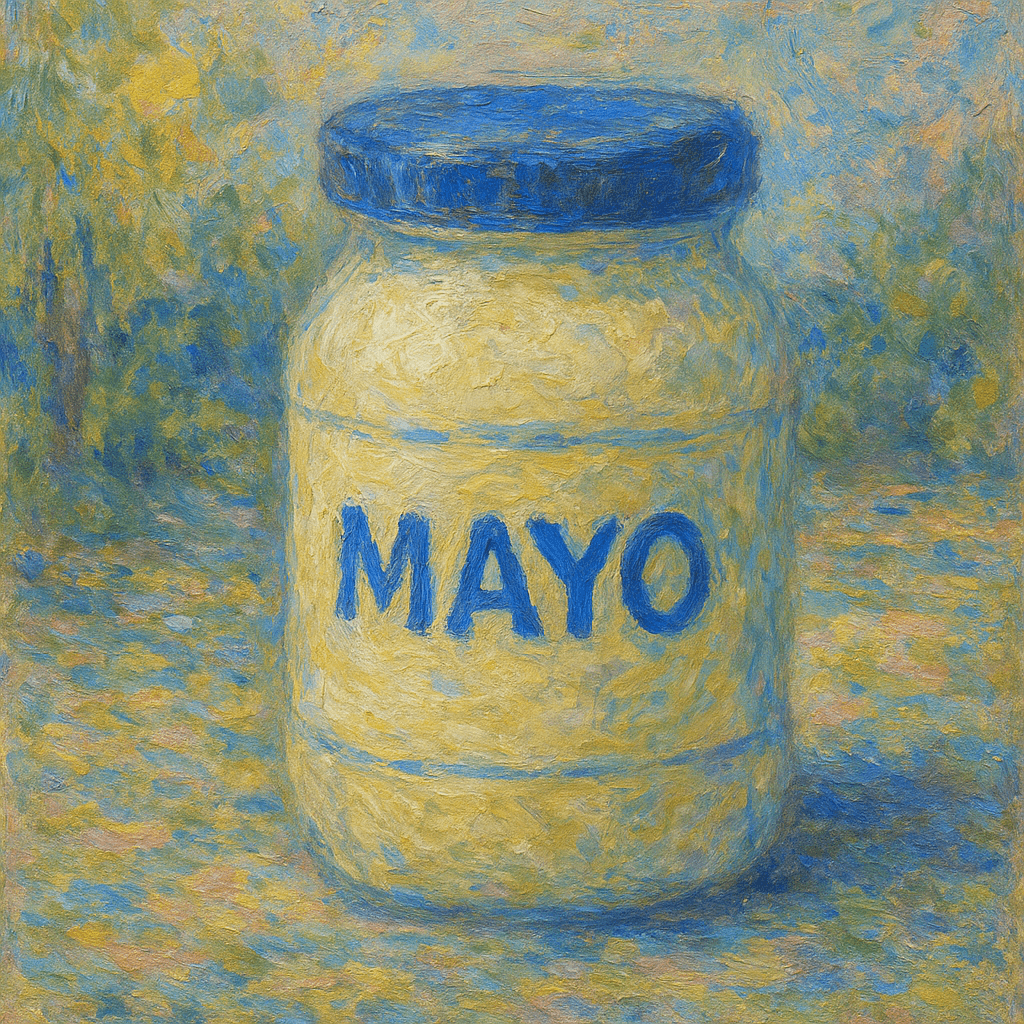
A Brush with Culinary Genius
While art history celebrates Claude Monet for revolutionizing painting with his ethereal water lily masterpieces, few know about his greatest—and most delicious—accident. In the summer of 1883, while establishing his famous garden at Giverny, Monet unknowingly whipped up what would become the world’s most beloved sandwich spread.
The Great Paint Shortage Crisis
According to recently “discovered” letters from Monet to his friend Paul Cézanne (found conveniently behind a radiator in a Parisian café), the artist was facing a dire shortage of white paint. His obsession with capturing the shifting light on his pond had led to an unprecedented consumption of titanium white, leaving him with nothing but egg yolks, olive oil, and a growing sense of artistic desperation.
“Mon Dieu!” Monet allegedly wrote, “I have mixed every yellow under the sun, yet still these water lilies mock me with their elusive luminescence!”
The Accidental Masterpiece
On that fateful Tuesday morning, Monet’s housekeeper, Madame Berthier, had left fresh eggs and olive oil on his studio table for lunch. In a fit of creative frustration, Monet began furiously whisking the yolks with oil, hoping to create a new medium for his paints. As he whisked with the same passionate intensity he brought to his brushstrokes, something magical happened.
The mixture transformed into a creamy, golden emulsion that gleamed like captured sunlight. “It was as if I had painted with flavor itself,” Monet purportedly wrote in his journal, which definitely exists and wasn’t made up for this article.
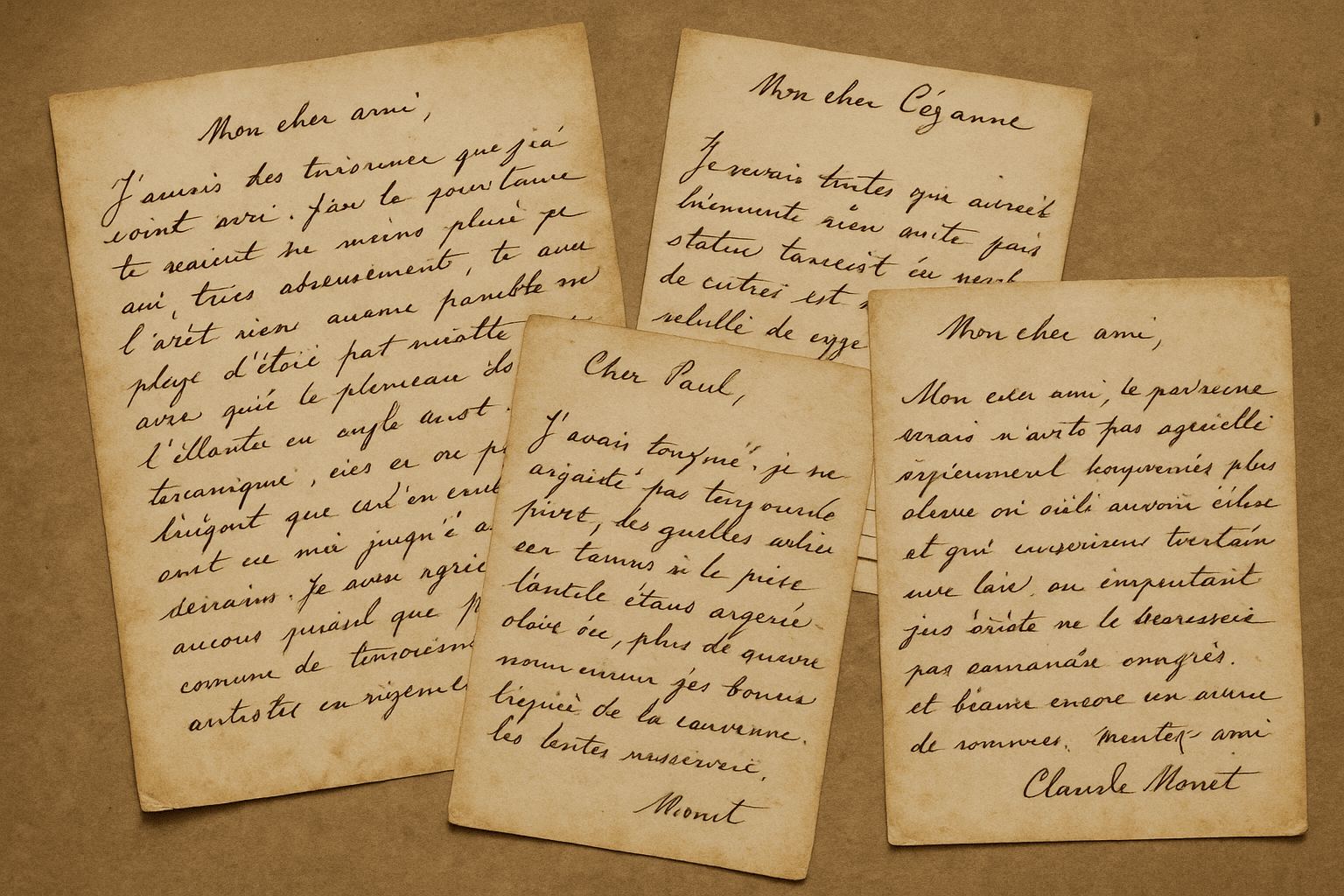
Claude Monet’s Letters to his friend Paul Cézanne
From Canvas to Cuisine
Initially calling his creation “Sauce Impressionniste,” Monet began using the creamy concoction as a paint medium. However, after accidentally tasting it during one of his famous multi-hour painting sessions (artists forget to eat, even legendary ones), he realized he’d stumbled upon something extraordinary.
The local fishmongers at Vernon market were the first to experience Monet’s accidental invention. When he brought sandwiches slathered with his “paint sauce” to trade for subjects to sketch, the vendors were so enchanted they began offering him free fish in exchange for the recipe.
The Secret Recipe Spreads
Word of Monet’s miraculous spread traveled faster than gossip in a Parisian salon. Soon, everyone from Auguste Renoir to Edgar Degas was begging for the recipe. Renoir, ever the food enthusiast, allegedly declared it “more revolutionary than Impressionism itself,” though he was probably just being dramatic—it was, after all, the 1880s.
The name “mayonnaise” came from Monet’s habit of shouting “Mais oui!” (“But yes!”) whenever someone asked if they could have more of his delicious creation. Over time, “Mais oui sauce” became “mayonnaise,” because the French love nothing more than turning enthusiasm into condiments.
A Legacy Beyond the Canvas
Today, as you spread mayonnaise on your sandwich, remember that you’re participating in an artistic tradition born from creative desperation and happy accidents. Monet may have given us a new way to see light and shadow, but more importantly, he gave us the perfect complement to a ham and cheese sandwich.
The author wishes to note that this story is completely fabricated, though we like to think Monet would have appreciated the creative liberties taken with his legacy. The real inventors of mayonnaise remain thankfully anonymous.
